
How satellite megaconstellations are changing the internet market and shaping a new geopolitics
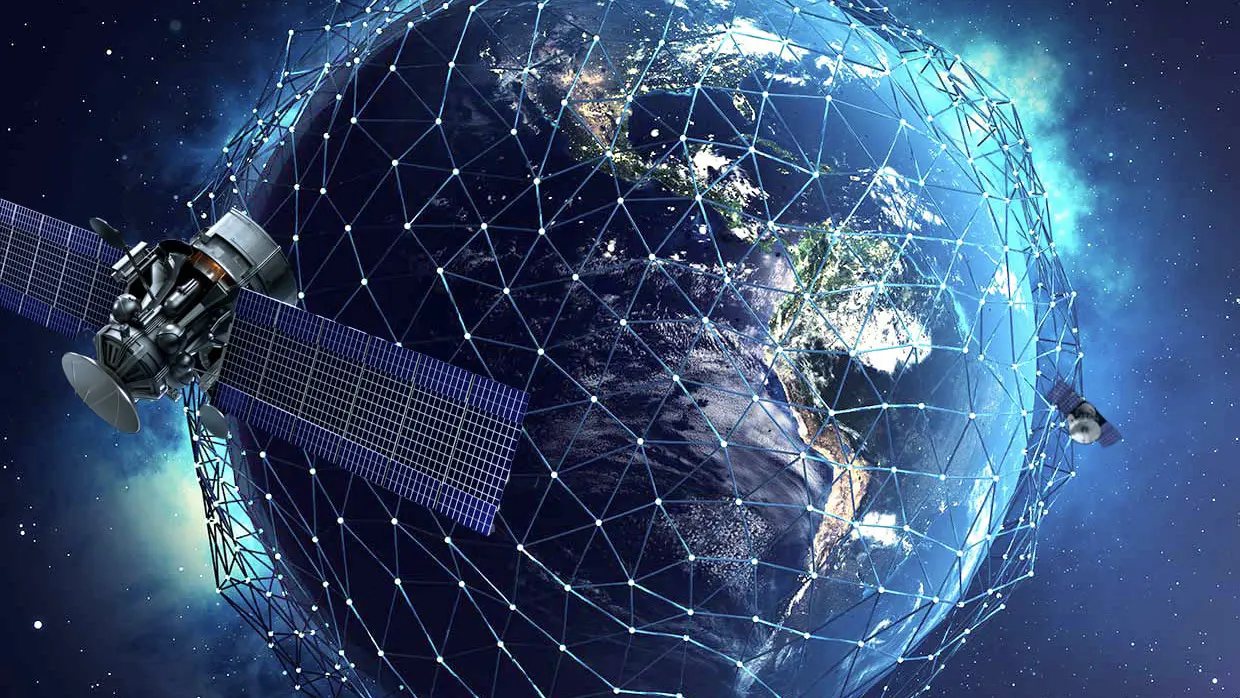
The global satellite internet market is growing rapidly, and large-scale megaconstellation projects are coming to the forefront. Why are American companies close to dominating this field, how is Europe responding, and what does this mean for the future of digital sovereignty and security?
Global satellite internet market
The modern concept of a “satellite megaconstellation” refers to extensive orbital networks that include hundreds or even thousands of satellites united by a shared infrastructure. These systems are designed to deliver internet access directly from space, bypassing traditional terrestrial networks.
Interest in megaconstellations is driven by several factors at once. First, they make it possible to provide connectivity to remote and sparsely populated areas where laying cables is not economically viable. Second, demand for satellite networks grows in emergency situations and during natural disasters, when conventional infrastructure fails.
In recent years, satellite internet has become a critical component of national security. One example is the use of such systems during the military conflict in Ukraine — their contribution to maintaining resilient communications has been noted by both the military and analysts (source: Euractiv, 2024). Gradually, countries and corporations are seeking to reduce their dependence on traditional telecommunications networks, relying on the versatility and flexibility of satellite constellations.
At the same time, satellite internet is finding applications in a wide range of industries. In transport, it is used for routing airliners and maritime vessels; in the energy sector, for monitoring remote facilities; in agriculture, for processing field data and automating machinery. In healthcare, such systems are becoming a key tool for telemedicine in hard-to-reach regions, and in education they help deliver online classes where there is no stable land-based connection.
It is also worth highlighting the development of digital entertainment, especially in regions with limited infrastructure. High-speed satellite connectivity allows users to stream content, watch HD broadcasts and access interactive services without interruptions. This is particularly important for formats that depend on stable data transmission, including live dealer games.
In this context, card games such as Andar Bahar also benefit, as video stream quality, the absence of lag and a stable connection directly affect how the game is experienced. Satellite internet makes such games accessible even in remote regions where this format was previously impossible. Those who want to get acquainted with the rules and structure of this game can open link, where basic reference information is provided.
Nevertheless, despite the growing importance of satellite technologies, the key challenge remains the same: to ensure reliable coverage and affordable services while maintaining the security and resilience of global communications.
Starlink and Kuiper — scale, risks and impact
The leading players on the market remain the American Starlink (SpaceX) and Kuiper (Amazon), which build their business models on the mass deployment of low-cost satellites into low Earth orbit (LEO, below 1,500 km). These satellites operate with low signal latency, which is critical for high-quality internet, but their service life is relatively short — from five to seven years.
Starlink already operates the world’s largest satellite fleet, with more than 8,000 satellites (according to SpaceX data as of June 2024). Kuiper currently has only around a hundred satellites in orbit but intends to ramp up its presence quickly. Starlink’s main advantage lies in vertical integration: in-house satellite manufacturing and launches using reusable Falcon 9 rockets help reduce costs.
Kuiper, for now, depends on third-party launch providers, including Arianespace, ULA and even SpaceX. In the future, launch costs for Kuiper may decrease with the introduction of New Glenn reusable rockets from Blue Origin. Although both Kuiper and Blue Origin are associated with Jeff Bezos, the companies are legally independent.
The companies are striving to capture global market share as quickly as possible, acting on the principle of “scale above all.” Antoine Lebourgouais, an analyst at financial company Stifel, notes that “Starlink and Kuiper are on track to forming a duopoly thanks to their unmatched scale and unique competitive advantages” (Stifel, 2024).
However, the economic model of these giants raises doubts among experts. Pierre Lionnet, a researcher at the ASD-Eurospace association, believes that the strategy of continuously increasing the number of satellites in order to boost speeds in congested regions is unsustainable, as launch costs remain high (Euractiv, June 2024). According to him, Kuiper will not be able to offer tariffs comparable to Starlink’s prices without operating at a loss.
The environmental footprint of such systems is also becoming a significant issue: even reusable rockets and mass production principles do not eliminate substantial CO2 emissions, and constant launches only increase the burden on the environment.
European and mixed operators
Against the backdrop of American expansion, European companies SES (Luxembourg), Eutelsat (France–United Kingdom) and Viasat (USA) are going through a complex transformation. They initially specialized in satellite broadcasting using geostationary satellites, but falling revenues from the TV market have forced them to pivot towards internet services.
These operators are focusing on serving specific segments: aviation, maritime transport, government contracts and connectivity for rural areas. At the same time, it is difficult for them to compete with megaconstellations in LEO — the American advantage in speed, cost and equipment portability is clearly felt.
The only European LEO player is OneWeb, owned by Eutelsat. It has about 600 satellites at its disposal, but manufacturing and terminals are supplied by third parties, and the company does not have its own reusable rockets. This prevents OneWeb from lowering prices to the level of Starlink and Kuiper.
Nonetheless, OneWeb plays a strategic role for Europe. European authorities view it as a kind of “backup” in case Starlink is blocked or becomes unavailable (especially in the context of the military conflict in Ukraine). For military purposes, OneWeb is considered less effective — lower speeds and higher costs — but for certain scenarios its support is important (European Commission, 2024).
Europe’s response to security and sovereignty challenges
In response to growing digital security threats, the European Union has launched the IRIS² project — the first large-scale orbital satellite communications infrastructure focused on governmental and military needs. By its planned launch in 2030, 290 satellites equipped with cutting-edge post-quantum encryption tools for data protection are expected to be placed in orbit.
The main task of IRIS² is to guarantee secure and independent communications for the highest EU authorities, the armed forces, intelligence services and key infrastructure. In essence, IRIS² is positioned as an “exclusive boutique” among mass-market internet services, with an emphasis on quality, enhanced security and a multi-layered architecture.
The project is gradually opening up to new participants: Norway and Iceland have already joined, and the participation of the United Kingdom and Ukraine is actively being discussed. An important feature of IRIS² is its interaction with European companies. Development and operation are shared between Eutelsat, SES, Hispasat and other regional operators, which makes it possible to pool resources and create a truly “European product.”
The EU has allocated €10.6 billion for the implementation of IRIS² — an amount comparable to the budgets of the largest national programs. Antoine Lebourgouais emphasizes that “only a shared infrastructure can ensure Europe’s sustainable development and real competition with American giants” (Euractiv, 2024).
Environmental and economic challenges of megaconstellations
The operation of megaconstellations is associated with new environmental challenges. Thousands of rocket launches each year increase CO2 emissions, and the end of satellites’ service life creates a space debris problem. Ensuring the safe disposal of each satellite requires significant effort and expense.
The economic sustainability of such projects also raises questions. Maintaining and renewing the fleet requires regular investment, while potential revenue volatility and dependence on government contracts increase risks for investors.
Differences in business models are becoming increasingly visible. Vertically integrated players such as SpaceX reduce costs and respond more quickly to market changes. Companies that rely on outsourcing face rising expenses and a loss of flexibility.
Geopolitics and the future of the market
The growth in the number of satellite megaconstellations is not only changing the economics of the sector but also shaping new centers of power on the global stage. In an environment of military conflicts and intensifying digital competition, satellite internet is becoming a tool of influence and even a means of diplomacy.
Countries and corporations face the task of finding a balance between market openness, technological independence and national interests. Discussions on common rules for the ecosystem and international cooperation have so far not led to a single consensus.
Will American companies maintain their leading positions? Will Europe be able to build a full-fledged alternative and ensure its digital sovereignty? The future of the market depends on decisions that will be made in the coming years, and the changes in this sphere will inevitably affect every internet user around the world.