
Artificial Intelligence Controls a Satellite in Space for the First Time and Changes the Future of Autonomous Missions
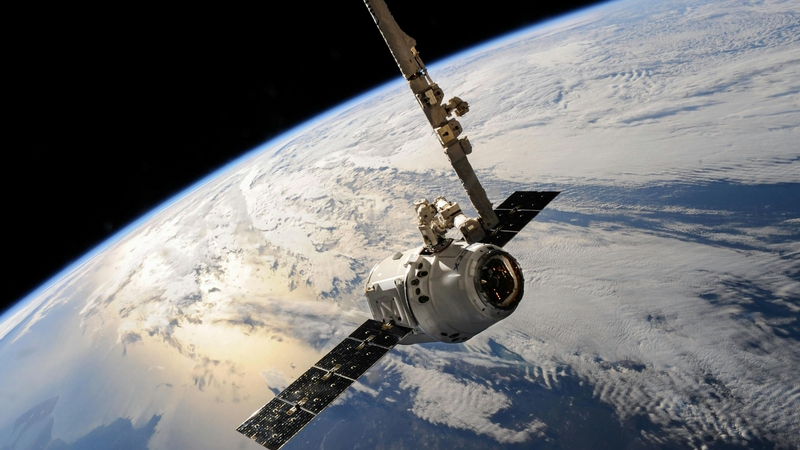
Can a satellite make complex decisions entirely on its own while in orbit? In October 2025, this became a reality: for the first time, artificial intelligence independently controlled a satellite’s attitude in space without human intervention. This achievement brings new questions to the forefront about how AI will change the approach to spacecraft autonomy and why trust in AI is becoming especially relevant for mission-critical tasks.
A Breakthrough in Autonomy
The key event took place on October 30, 2025. On this day, an artificial-intelligence-based attitude controller was tested and successfully used for the first time aboard the 3U nanosatellite InnoCube, developed by the German LeLaR team at the University of Würzburg. The system independently executed an attitude maneuver, using reaction wheels to adjust the satellite’s orientation relative to the target coordinates. The experiment was carried out by a group of researchers led by Dr. Kirill Dzhebko and Professors Frank Puppe and Sergio Montenegro, together with specialists from the Technical University of Berlin who contributed to the development of the platform.
“This is truly a defining success,” Dr. Dzhebko emphasizes. According to him, it was the first time a complete attitude change of the satellite was controlled exclusively by AI. In subsequent tests, the system consistently repeated the maneuvers, confirming its reliability in actual on-orbit conditions.
How the Satellite’s AI Controller Works
The technology is based on the Deep Reinforcement Learning (DRL) method. This approach enables an artificial neural network to learn satellite control gradually by receiving feedback from a simulated environment. Simply put, AI can be compared to a pilot practicing maneuvers in a simulator: it tries different actions, evaluates the outcomes, refines its control strategy, and improves its skills until they become fully optimized—only in digital form.
The system relies on the concept of feedback: the satellite continuously evaluates its position using sensors, and the neural network adjusts its actions to bring the spacecraft closer to the target orientation. This mechanism allows it to respond to even the slightest deviations and maintain stability despite unexpected changes in conditions.
Advantages and Challenges of the New Approach
The key advantage of the DRL controller is its ability to rapidly adapt to new conditions and automatically adjust parameters. Such systems substantially save engineers’ time, as they no longer need to manually calibrate algorithms—a process that can sometimes take months or even years. In addition, the AI can independently analyze differences between theory and reality and account for unexpected disturbances, which is especially important for autonomous operation in unstable or unpredictable environments.
However, this progress comes with challenges. One of the key issues is the Sim2Real gap—the discrepancy between training in simulation and performance on a real object. To successfully transfer skills, it is necessary to create highly accurate digital models that are as close to reality as possible. Thorough testing of AI performance in various orbital scenarios and assessment of its reliability in critical cases are also required.
Integrating AI into spacecraft introduces a new level of risk, as algorithm failures can lead to loss of control or equipment damage. Experts note that further efforts must focus on improving the predictability and controllability of such systems.
Why Trust in AI in Space Is Growing
The successful experiment on InnoCube has significantly strengthened the position of artificial intelligence in the aerospace industry. According to Professor Frank Puppe, the obtained results will greatly increase trust in AI-based methods in aviation and space exploration. Experts also highlight the importance of accurate simulations that ensure safety when transitioning from the laboratory to real orbit.
There is consensus in the professional community that growing trust is essential for autonomous missions where prompt human intervention is impossible. For deep-space flights or missions to planets millions of kilometers away from Earth, decisions must be made automatically on board, as signal delays can reach tens of minutes or even hours.
New Technologies Aboard InnoCube
The InnoCube satellite became not only a testbed for AI but also a platform for other technological innovations. One of them is the wireless SKITH (Skip The Harness) bus, which replaced traditional cabling with a radio-based data transmission system. This solution significantly reduces satellite mass, lowers the number of potential failures caused by wiring damage, and simplifies equipment integration.
Such technologies are especially promising for small spacecraft. Experts note that minimizing mass and simplifying design make it possible to launch more complex missions without increasing costs.
Prospects for Autonomous Missions
The breakthrough achieved by the German team paves the way for a new generation of spacecraft. Satellites will now be able to independently adapt to unexpected situations, solve complex control tasks, and troubleshoot without constant ground support.
This raises a natural question: can artificial intelligence control spacecraft millions of kilometers from Earth, where any human intervention is limited by the speed of light? According to forecasts from several research groups, such systems will become indispensable for interplanetary and long-duration orbital missions. NASA and the European Space Agency are already considering integrating AI into next-generation crewed and automated stations, as indicated by materials from open conferences and official statements.
Deep-learning-based technologies are also planned for use in autonomous navigation, data analysis, and onboard equipment diagnostics.
Prepared with the support of www.monopolybigballergame.com